


Florida child car seat laws ensure children are safe while traveling in a vehicle. Regular car seats are not designed to protect children, and even safety features like airbags and seat belts can fail to keep them safe in a car accident. By following these laws, you can keep your child safe while also protecting future claims if you do get into a crash.
If your child suffered serious injuries in a collision in Tampa, Florida, you may have the option to pursue a personal injury claim. At Mincone Personal Injury Lawyers, our Tampa car accident lawyers can assist you in understanding your rights and fighting for fair compensation. Call (813) 800-0810 to schedule a free consultation.
How Mincone Personal Injury Lawyers Can Help After a Car Accident in Tampa, FL
Being in a car accident in Tampa, FL, can leave you and your loved ones struggling with catastrophic injuries that require extensive medical care, lost wages from not being able to work, and a variety of other losses. If the accident occurred because of another party’s misconduct, you may be entitled to pursue compensation by filing a personal injury claim.
At Mincone Personal Injury Lawyers, our team of Tampa car accident attorneys can help you by:
- Evaluating your claim during a free consultation
- Investigating the car accident
- Collecting evidence
- Establishing liability
- Calculating your full damages
- Negotiating with insurance companies to obtain a settlement
- Litigating, if it’s not possible to get a settlement
In the decades we have been providing legal assistance in the Sunshine State, we have secured tens of millions of dollars for our clients. We provide the personalized and dedicated representation you need as you navigate the intricacies of Florida’s personal injury claim system. Contact us to schedule a free consultation with our Tampa personal injury lawyers.
Car Seat Laws in Florida
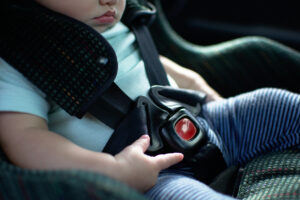
In Florida, infants and toddlers up to 3 years old must sit in special infant car seats or an integrated car seat made specifically by the vehicle’s manufacturer. For children 2 and under, rear-facing seats are required. Car seat laws also require that children ages 4 and 5 sit in an integrated car seat, a separate car seat, or an appropriate booster seat.
Your child should continue to sit in the booster seat until they are large enough that the seat belt sits correctly across their lap, chest, and shoulder. The belt should not cross the child’s face or neck.
There may be exceptions if the child:
- Is being transported because of a medical emergency,
- Has a documented medical condition that prevents them from traveling in these restraint systems
- Is being transported by someone other than a member of their immediate family.
In these situations, car seat laws may not apply.
Why Child Car Seats Are Critical for Safety in a Car Accident
Child car seats play a vital role in protecting children during car accidents by reducing the risk of serious injury or death. Because their bodies are still developing, standard seat belts are not designed to fit or protect them properly.
Car seats are specifically engineered to account for a child’s size, weight, and vulnerability, helping absorb crash forces and keep them securely positioned during impact.
When used correctly, child car seats provide several important safety benefits, including:
- Proper body positioning, which keeps a child’s head, neck, and spine aligned and supported during a crash
- Reduced force on the body, as the car seat distributes impact energy across stronger areas instead of concentrating it in one spot
- Prevention of ejection, keeping children securely restrained inside the vehicle
- Protection for the head and neck, especially in rear-end, side-impact, and rollover collisions
- Improved restraint fit, since harnesses are designed specifically for a child’s height and weight
Car seats are one of the most effective tools for preventing severe injuries in car accidents involving children.
However, their protective value depends heavily on correct installation and proper use. Using the right seat for a child’s age and size, and ensuring it is installed according to the manufacturer’s guidelines, can make a significant difference in a child’s safety during a crash.
Understanding How Car Seat Laws Impact Personal Injury Claims in Florida
One issue you may run into if your child suffered an injury and was not in an appropriate car seat for their age is that you could be blamed for your losses.
In Florida, you can typically still receive compensation after a serious crash if you were partly to blame for the injuries, as long as you were no more than 50% at fault. If you are assigned a higher amount of fault, you will not be able to obtain compensation.
Because of this, you can expect insurance companies to do everything they can to put the blame on you. If your child suffered injuries when they were not seated in the appropriate restraint system for their age and size, you could be seen as ineligible to obtain compensation.
Contact the Tampa Car Accident Attorneys at Mincone Personal Injury Lawyers for a Free Consultation
If your child was hurt in an accident and you’re worried that you won’t be able to file a claim because you did not follow the state’s car seat laws, it’s vital that you contact experienced attorneys for assistance. At Mincone Personal Injury Lawyers, our team can assist you in fighting for your rights. Contact our Tampa car accident attorneys for a free case assessment.
